14 Topics
 5 Days
 56 Sessions
Programme Overview
Training Description
Agricultural exporters and producers
Agribusiness entrepreneurs and managers
Export marketing professionals
Trade promotion officers
Agricultural policymakers and government officials
Agricultural cooperatives and producer organizations
Supply chain managers
Logistics and shipping professionals
Agricultural consultants and advisors
Researchers and analysts
Students of international trade and agribusiness
Individuals interested in African agricultural exports
Investment promotion agency staff.
Session Objectives
- Understand the principles and benefits of exporting African agricultural products. Implement techniques for conducting international market research and analysis. Understand the key international trade regulations and standards for agricultural products. Implement techniques for developing and implementing export market entry strategies. Understand the role of quality control and certification in export markets. Implement techniques for ensuring product quality and compliance with international standards. Understand the principles of export logistics and supply chain management.
About the Course
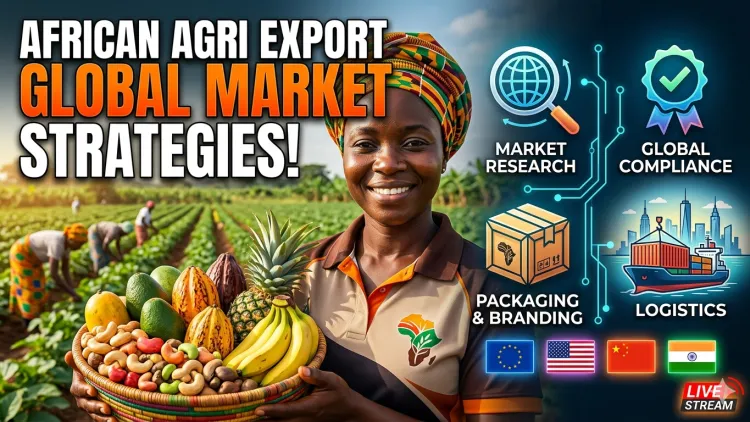
Export Market Strategies for African Agricultural Products equips businesses and professionals with the knowledge and skills to successfully penetrate and thrive in international markets. This course focuses on understanding global market trends, implementing effective export strategies, and navigating the complexities of international trade. Participants will learn to identify target markets, comply with international standards, and build strong export partnerships. By mastering export market strategies, professionals can unlock the vast potential of African agricultural products and contribute to economic growth.
African agricultural products possess immense potential in the global marketplace, offering unique flavors and high-quality produce. This course delves into the intricacies of export market analysis, trade regulations, and logistics, empowering participants to develop and execute successful export plans. By integrating market intelligence with practical export tools, this program enables individuals to create sustainable export businesses that enhance the value of African agricultural products and strengthen their presence in international markets.
Curriculum & Topics
14 Topics | 56 Sessions
-
 Workshop 1.1:
Principles and benefits of expanding African agricultural exports.
Workshop 1.1:
Principles and benefits of expanding African agricultural exports.
-
Workshop 1.2:
Understanding the role of exports in economic development.
-
Workshop 1.3:
Benefits of diversifying markets and enhancing value chains.
-
Workshop 1.4:
Historical context and current global trade trends.
-
Workshop 2.1:
Techniques for identifying target markets and consumer trends.
-
Workshop 2.2:
Implementing market entry feasibility studies.
-
Workshop 2.3:
Utilizing trade data and market intelligence tools.
-
Workshop 2.4:
Managing market research and competitor analysis.
-
Workshop 3.1:
Understanding key international trade agreements and protocols.
-
Workshop 3.2:
Implementing food safety standards and phytosanitary requirements.
-
Workshop 3.3:
Utilizing customs regulations and import/export procedures.
-
Workshop 3.4:
Managing compliance with trade barriers and tariffs.
-
Workshop 4.1:
Techniques for developing market entry plans and strategies.
-
Workshop 4.2:
Implementing direct and indirect export methods.
-
Workshop 4.3:
Utilizing strategic partnerships and joint ventures.
-
Workshop 4.4:
Managing market entry risk and adaptation.
-
Workshop 5.1:
Understanding the role of quality standards in export markets.
-
Workshop 5.2:
Implementing quality assurance and control systems.
-
Workshop 5.3:
Utilizing international certification schemes and traceability.
-
Workshop 5.4:
Managing quality audits and inspections.
-
Workshop 6.1:
Techniques for ensuring product quality and safety.
-
Workshop 6.2:
Implementing post-harvest handling and processing standards.
-
Workshop 6.3:
Utilizing packaging and labeling requirements.
-
Workshop 6.4:
Managing product compliance and documentation.
-
Workshop 7.1:
Understanding the principles of international logistics and shipping.
-
Workshop 7.2:
Implementing supply chain planning and optimization.
-
Workshop 7.3:
Utilizing freight forwarding and customs brokerage.
-
Workshop 7.4:
Managing export documentation and transportation.
-
Workshop 8.1:
Techniques for preparing export documents and certificates.
-
Workshop 8.2:
Implementing customs clearance procedures and requirements.
-
Workshop 8.3:
Utilizing electronic documentation and trade facilitation tools.
-
Workshop 8.4:
Managing customs compliance and risk mitigation.
-
Workshop 9.1:
Techniques for developing international marketing plans.
-
Workshop 9.2:
Implementing branding and product positioning strategies.
-
Workshop 9.3:
Utilizing digital marketing and e-commerce platforms.
-
Workshop 9.4:
Managing international promotion and sales.
-
Workshop 10.1:
Understanding international contract law and trade agreements.
-
Workshop 10.2:
Implementing sales contracts and dispute resolution mechanisms.
-
Workshop 10.3:
Utilizing intellectual property and trademark protection.
-
Workshop 10.4:
Managing legal compliance and risk mitigation.
-
Workshop 11.1:
Understanding the role of trade promotion agencies and events.
-
Workshop 11.2:
Implementing networking strategies and business development.
-
Workshop 11.3:
Utilizing trade missions and exhibitions.
-
Workshop 11.4:
Managing international partnerships and collaborations.
-
Workshop 12.1:
Developing value-added processing and packaging.
-
Workshop 12.2:
Building sustainable supply chains and fair trade practices.
-
Workshop 12.3:
Implementing environmental and social responsibility standards.
-
Workshop 12.4:
Managing ethical sourcing and traceability.
-
Workshop 13.1:
Analyzing real-world examples of successful African agricultural exports.
-
Workshop 13.2:
Highlighting best practices and innovative strategies.
-
Workshop 13.3:
Documenting economic and social impacts.
-
Workshop 13.4:
Exporter and industry leader testimonials.
-
Workshop 14.1:
Exploring emerging markets and trade opportunities.
-
Workshop 14.2:
Integrating new technologies and e-commerce platforms.
-
Workshop 14.3:
Adapting to evolving global trade policies and consumer preferences.
-
Workshop 14.4:
Building resilient and sustainable export businesses.